
Tuesday, 1 May 2018

Monday, 23 April 2018
Reflection
My blog doesn’t really reflect, my rationale, as I didn’t watch any shows about animals, or documentary about endangered animals that week. In that week I did watch shows and films that have animated animals, which might have influenced why my blog was about animals. The obstacles that I faced while writing my blog was looking up facts about endangered animals, as there is a lot of them. This was because I had to try to narrow down what animal to do, and getting the important information, which I thought would be important to my viewers. One of the main issues was making sure that I didn’t copyright the information from the sites, as most of the information was facts on the animal. In the blog, what I could of improved on was putting my own opinion in some of the posts rather than just giving facts about the animals. The particular area, I think that I succeed on, would be pitching the blog to the right age group, as when I pitched to my class everybody seemed interested in the topic. In the blog, I could have improved on making the blog more interactive with the audience, by maybe putting in a voting poll or more gifs.
Throughout the unit, we had lecture and seminar about how to make a good blog and lectured that link to the films we were watching in the cinema, for example, Love Simon, we had a lecture on gay cinema and the history about it. During the lecture we would do a questionnaire, to see what type of shows or films people were watching and how they were interacting on social media, this was helpful as I got to know what type of shows and films people watch and what social media site they use often. This helped towards my blog as it told me how I could make my blog more interactive with my audience and what type of person would look at it. During the seminar we talked about how we could design and write our blogs, some seminars we would pitch an idea to our groups. We discussed ideas from our lectures in the seminars and talked about how we could use it in our blogs, and we talked about the film we watched. We also talked about the news and what people’s opinions are about certain things.
As well as seminars we had a Facebook group chat where we was able to ask other student questions about our blogs and this helped people give advice to other people, and get advice from them too, which was helpful. During the seminars we got into groups to discuss our ideas for our blog, we could help each other with ideas, and know what other people were doing, this helped to know how they might of set out their blog and if anything, I could do to improve mine. In the seminar we would stand up in front of the class and pitch our blog, to the class and show them what we have done, this was helpful as people asked questions about the blog and helped to make improvements to it, also it helps me know, that people were interested in it.
During this unit, I have learnt how to improve my writing skills, this is not only to write in a professional way, by to write in a more casual way that would engage the audience more, as they are reading a blog and you can write in a certain style which would interact with my target audience. This unit also helped me understand how you can contribute your opinions on online decisions in different type of media. As you can comment on blogs and social media sites with your own opinion about the matter they are decreasing. However, it was still difficult to involve this into my own blog as most of my blog is information, which informs you about the endangered animal than my opinion on them.
My group did talk and meet up about our blog and infographics. We got along well, and gave each other advice on how to improve certain parts, and how to improve certain things on our blog too. We all did our own infographic on different software, which helps when discussing what to use, which one was easier and more creative to use. When we give advice on the infographic, some were well detailed, and other where more pictures and straight to the point. What I could have improved on mine is to put more information on it, with maybe fewer pictures. To improve the group, we could talk more in the group chat and meet up more as well. Overall, I think that the group worked well with each other, giving important information of how to improve certain things.
Monday, 16 April 2018
Zoo's, Safari and Wildlife Santurary: SeaWorld
What are the benefits and disadvantages of these places?
The benefits of these places that that firstly all these places have one thing in common, which is to protect endangered animals form going extinct. So these places are used to increase the population of the animals. Lots of important research can be done in a safe environment, to help the animal’s condition in these places. Places like, the Zoo and Safari are used to use for tourist to be able to see wild animals, in a safe environment where they might not be able to see. This makes it easier for educational research as children can see they favourite animal and learn about them. If the animal, gets ill its easier for them to get treatment, then if there were living in the wild, this means that they would be less animal dying form infection or when they get hurt. The animals will be less likely to die from starvation or being poach for their fur or bones. It’s also a safe place to breed animals and more likely for them to survive to an old age.
The advantages are mainly from Zoo’s as there are put in confined areas, where there isn’t enough place for them to roam about freely. It can cause the animal to have a psychological effect which will affect it mental health. New born will not now what it is like to be a wild animal as they will be living in captivity there whole life, because it would be possible for them to go back into their natural habitat, as they would know how to survive by themselves. Personally I think that it’s better for animals to be in a Safari or Sanctuary, as they have more places to roam about and be a wild animal, plus they can also protect from poachers. But I do think that Zoos are a safe place for animals to be but only if there give them the right environment to live in. there is still room for improvement to make all these places safer, and natural for the animals to live in.
There has been cases for example SeaWorld, where is you hear incident about Killer Whale and how here would be better to survive in the wild then captivity as there has been many terrible story about how they have been mistreated, and attacks on employees. In 2015 Barbie drops out from making SeaWorld babies, in April 2015 because of the mistreatment of Orcas and being under investigation by the PETA. (The People for the Ethical treatment of animal) is a foundation based in the UK for protecting the rights of all animals. Overall the attendance of SeaWorld has been dropping.
SeaWorld, as you can see here say that it is important for the mother and calf to stay with each other as it creates a strong and important bond. But as you see there were separated before the calf was four years old, know lets thank about how important it is for us to stay with our parent when we are young, without them who can we learn from and trust.

These are two articles which talks about Orcas which is a type of whale and how you can help to support them. This tells us about the fate of them being in captivity and how it affects them down the road. It also tell you about the mistreatment not only to the whale but the employee too, and how it effects there mental health. Animals did not have a choose whether they wouldn’t do be put in captivity or not, I think if animals could talk the majority of them would say that they don’t what to live like that. If human wouldn’t like to live in captivity why would people think that animal would like to?
If you want to know more about SeaWorld and mistreatment of their animals an interesting documentary is called Blackfish.
Monday, 9 April 2018
White Rhinoes And Wild Dogs

They are the second largest mammal. They live in South Africa, Zimbabwe, Namibia and Kenya. Where there is grassy savannah and woodlands. There are two types of rhinos that live in these places Southern Rhinos and Northern Rhinos. Northern adult rhinos grow to 185metres and 3.6 tonnes. Females are partially smaller but can still grow to 1.7 tonnes. White rhinos have a large skull, no hair and two horns. The front horn can grow up to 70cm, but it can reach up to 150cm. Rhinos have tough skins. They can live up to 40 years.
They live in grassy savannah, and woodlands. Rhinos avoid the heat during the day, rest in the shade and are active in the afternoon and evening. They like to bath in shallow mud pools. They normally go around in herds that have around fourteen rhinos, in each. The breeding females cannot leave the group. The males are very competitive over them and get seriously hurt when fighting over them.
There are around 20 000 southern rhinos living in the wild, but only three northern rhinos, that are in captivity. Two are female and one is male. Sadly last year the last male northern rhino died. The last northern rhino died on 20/03/17 age 45 years. This was due to illness from an infection from his back legs and other things also have him.
There have been talks about using IVF to impregnate the female rhino’s, but it will be challenging,
What there used for?
Many countries believe that rhino’s horns are an important ingredient for many of their medicine. Poaches trade the horns, these are used to cure illnesses, hangovers and fever. There is also a symbol of wealth, in connection to rhino’s horns. This mainly started because of a myth that horns can cure cancer; this then increased the number of people who were poaching for the animal, as the prices of the rhino's horn went up.
In 2012 668 rhinos were poached in South Africa. In January 2013 that increased by 946. This is nearly 2 per day.
Some action that took place to protect the rhinos are through the WWF, by providing new protection areas and improving management of each areas, having security monitoring certain areas and tourism experiences, therefore they can have more experiences of the animal, and make money to help them to keep protecting them.
Wild dogs
 |
| Also Kown as Cape Hunting Dogs |
Live in open plains, woodlands of Saharan Africa.
They have long legs, four toes, unlike other dogs which have five. Mottled coat with red, black, white and yellow patches, which are round. They also have big rounded ears.
The wild dogs live in large groups of 6 to 20 and are pack animals. They are also social animals, who interact with each other, by touching, chattering to each other and showing different actions. They share food with the whole pack and assist with the ill and weak members. There have high stamina, and they are known as the killing dogs, because when they kill their prey they start to eat the prey before it is dead.
Endangered due to the shrinking of habitat. They easily catch diseases from domestic animals. Hunted and killed by locals and farmers, as there may try and eat the farmer's food.
Only four types remaining in the population. They can roam 250 square kilometres and can travel 50 km in a single day.
Monday, 26 March 2018
Sibraian Tiger
 |
| Also known as Amur tigers. |
Amur tiger weighs from 396-600 pounds, and can be as long as 10 feet. They have striped yellow winter coat, with a white underbelly. They are large and muscular, with thick coats, and have great strength. The thick coat is to keep them warm in the winter. All of their stripes are unique to each other and fingerprints.
Habitat?
Their habitat has been restricted to the Primoski and Khabarovsk provinces of Russian, far East and small section of the boarder of China and North Korea.
Amur tiger are found in Russian Far East, northern China and some parts of North Korea. By the 1940s there was around 40 tigers in the wild, therefore they nearly become extinct. Russia was the first country to put laws to give full protection to the tigers. In the 1980s the numbers increased but so did poaching numbers, this was due to the collapse of the Soviet Union.
The population is around 540, and stable due to the help of the WWF (World Wide Fund For Nature) and other partners who help to protect them from poaches. Most of the tigers now are located in a tiger sanctuary.
The northern climate is harsh as it can get very cold, therefore there is the lowest density of human population there, and a complete ecosystem, as they live in the woodlands. Their habitat is slowly being decreased, as primarily where the tigers live is used for logging, as 30 percent of the forest is used for illegal logging. This means that they are forced to live in smaller and isolated places where it is more exposed to poachers.
Females have around two to six clubs which they raise themselves, with little help from the male tiger. The clubs cannot hunt by themselves until 18 months, therefore they mainly relay on their mother. They remain with the mother for two to three years, then they find their own territory.
Why is the Siberian Tiger endangered?
Poaching effects large number of tigers, this is because of different parts can be used for different situations. Poaching is high on the black market to sell the body of the tiger, such as their eyes, fur and internal organs these are used for trophies, as a status symbol, Chinese medicine, such as tiger bone wine. The teeth, claws and whiskers are used as good luck or belief of protection powers. The coats are used for camouflage to help to hide from other animals when they are hunting. Tigers can bring in around 50,000 dollars on the black market. Animals such as deer, and wild boar which are the prey that the Amur tiger’s hunt. As poachers all hunt their prey, therefore there is less for the tiger to eat , so Amur tiger have to search larger distances to find food, which may cause them to be killed by locals and poaches.
Monday, 19 March 2018
Snow Leopard
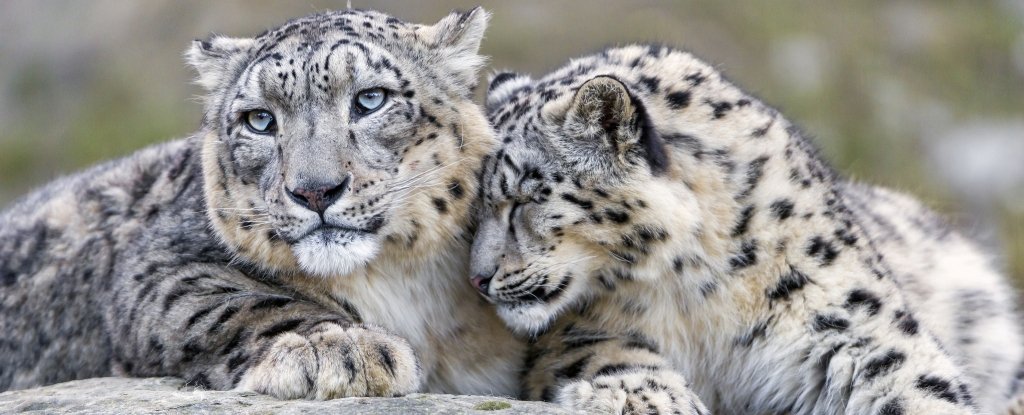
The beautiful and rare snow leopard has a powerful build and a medium size body, with an extra-long tail that keeps the leopard extra warm, but also contributes to its balance, while climbing mountains. It has thick fur to protect itself from the extreme cold weather, and large paws to keep from sinking into the snow. Their thick grey fur patterned with grey spots (which are unique to all different leopards) which makes a great camouflage and is perfect for them to stalk their prey. Snow leopard are solo travellers and, the only time when they are in company is when they have children and the female will be with her clubs from between 15- 22 month and then the will leave and venture by themselves.
Habitat?

Snow leopard live in mountains in Asia, China, Himalaya, and Russia. They are also found in 12 other countries. Mainly where there are mountain grassland, mountains, broadleaf forest, coniferous forest and topical coniferous forest. The climate in these places and normally cold and dry as there live in high altitude places. In the Himalayas, they are found in 3,000-5,400 meters above sea level.
Why is the Snow Leopard endangered?
 Climate Change create an unstable habitat for snow leopards’, therefore because of change of temperature, certain vegetation will not grow, and the water supply will become less, as they live in such places like the mountains and forests where is doesn’t rain that much. In addition, Mining takes away the environment for the leopards to live, also the increases of grazing space (farms), also takes away land for the Snow Leopards. Mining damages the land and less vegetation will grow, an increase of more roads also damages there habitat.
 Poaching, around 220-450 cat per year are being killed or traded. Snow Leopard’s fur, our used to decorate people house, and their bones and other parts which are used in traditional Asian Medicine. Illegal trade has increased which means that these animals are in more danger from being poached. Snow Leopards are being killed from local people, as they kill their livestock, but also because people over -hunt and poach animals, such as wild sheep, goats which are the snow leopard’s food source , therefore it is harder for the leopard to find food, therefore its easier for them to go to the local farms to kill livestock
You can donate money to WWF, and Snow Leopard Trust.
If you're interested in a documentary about Snow Leopards you can watch ‘Planet Earth II’
Monday, 12 March 2018
Introduction To My Blog
This blog will discuss the importance of protecting endangered animals. Moreover, not just endangered animals, but all animals. We all know the importance of Bee’s and what they do to our environment by producing pollen that grows our flowers and therefore helps to produce food. As each animal has a place in this world, each animal makes a change to our environment and our eco-system.
Sadly because of the increase of population, it makes it harder for the animal to survive as we take and need more places to live, we then damage the forest or field to build more buildings, therefore damaging their habitat. If we could find a better way to live with each other, some of the issues that I will discuss would help to decrease and protect animals, from being endangered or worse extinct.
Some of the main issues for endangered animals are:
· Poaching
· Deforestation
· Global Warming
· Environment and Communication
Poaching: Is when an animal is killed illegally. It occurs when the animal possesses something of value to the poacher. For example, using an animal’s fur or bones for trophies. Lots of these items are sold on the black market mainly in Asian countries to be used as medicine. Poaching is threatening a large amount of animals all over the world.
Vietnam, China, Thailand and Korea are a few countries with markets for horns and tusks. The corruption, loose laws and light sentences allow criminal networks to freely, keep poaching animals. As the people who get caught are normal poor locals, therefore this leaves the top dogs to keep running their networks safely.
Deforestation: Is the removal of the forest or standing trees. This is where the forest is therefore converted to a non-forest and change to be farms, ranches or urban uses such as houses. Sometimes the forest is left damaged, because all they have done is cut the trees down, therefore the quality of land is unable to be reused.
Global warming: is the increase of the overall temperature of the earth’s atmosphere. This is affected by greenhouse gases increasing such as carbon dioxide and other pollutants. Which in time affects the air that we breathe, also it affects the conditions of the vegetation that we and other animals eat.
Environment and Communication: Lack of communication between people, means less information about how to treat and protect animals. This is because people do not understand the condition that we create for them. Therefore, it would be beneficial to the environment to have stricter rules about how to protect the environment that we, both human and animal are living in.
What is the difference between:
- · Zoo
- · Safari Park
- · Wildlife Sanctuary
Zoo
Is an enclosed place, which has a collection of wild animals. This is where animals are shown to the public, so that they can take pictures of them and walk around freely without feeling that they will be harmed from them. Zoo’s, are also there so that endangered animals can be studied and safely reproduce, to keep them from becoming extinct.
Safari Park
An area of parkland, where wild animals are kept in open areas. Where they can roam around freely, therefore, this helps to have tourists to be able to drive through the attraction and observe animals in a more natural habitat.
Wildlife Sanctuary
Is a large area of land which is protected from poaching, animals which are endangered can freely roam around and live in peace. This can be as big as an island. There is mainly African wildlife Sanctuary.
Monday, 5 March 2018
Rationale
This rationale is about reflecting on my own media consumption, and how it reflects on the type of blog, I am writing. During the first week of this unit, I was asked to keep a media dairy, that would consist of what I have been watching and what I have been doing while watching the programme or film. From this dairy, I can tell you that I have been watching films and programme from Netflix, and especially Netflix original. I often use my phone while watching programme or films, as most teenagers multitask. As you can see I watch things that I think relate to my age as a teenager, as most of the programme or films are teenager base. Sometimes at night, I would watch children films, as I can be doing something else and you don’t have to concentrate that much t them, especial as I have seen them all before. As you can see I think to watch programmes or films that are convenient to me, therefore the majority of the usage is online, this would be places like, Netflix, Amazon Prime or YouTube, there is also a app on my phone which I can watch films and series from. Therefore when I am ready to watch these programmes or films I can. Most of the TV watches would be daytime TV, and most of the time I would be playing on social media apps while watching these programme. The majority genre that I would watch would be action, drama comedy, thriller and reality shows which are mainly Korean. My comfort zone would be children films and adult swim which are adult cartoons, as they are funny and light-hearted.

If I reflect on my social factors of what I watch the majority of the films and programmes are age appropriate and teenage based. These programmes are probably things that some teenagers would watch. As Netflix is one of the best media sites to watch films and series on, most teenagers my age would watch programmes on this site. As being middle class, the majority of the programmes or films I watch are something that I could relate too. Some of the films have a strong women role in them, therefore this helps to connect to the programme or film. The normal form of media, I would use daily would be Instagram, Facebook, Snapchat, Tumblr and YouTube, as these social ape, help me to communicate with people easier, and see what the world is up too. This allows me to catch up on things like Kpop which would have news that comes last at night or early in the morning. Therefore, I check my apps throughout the day. The most passionate media form would be Instagram and Facebook as it easy to use and easy to connect with people and see whats on the news. The majority of teenagers would use these apps as well.
The majority of places I would watch programmes and films on would be at home, as it more convenient to be in a relaxing place, but also you do not have to spend money on cinema, as the cinema is expensive. Most teenagers would think the same things as, everything is on the internet. The form of media, that I don’t really engage with, would be twitter, as it doesn’t interest me, also watching horror things, as the majority of them are too scary to watch, but I have watched a few as some have good plots.
From doing this media diary for the first week on the unit, I found out, is that most of the things I watch would be programmes or films that would keep you engaged, throughout the day and at night a more lie back programme or film. I use Netflix daily, as it is an easy form of media to watch programmes and film you want to watch. Most form of social media I would use is Facebook or Instagram, where I can catch up with the latest news and pictures. I use Youtube daily as well, this is where I used to watch videos, read comments and make comments myself. This helps me write my blog by showing me, that’s using pictures and maybe gifs will keep the audience more engaged on my blog and as nowadays gifs are quite popular to use, as most people will multitask, also that my target audience would be around 17 and over. As the majority of people who would look at this blog would be teenagers.
Subscribe to:
Posts (Atom)